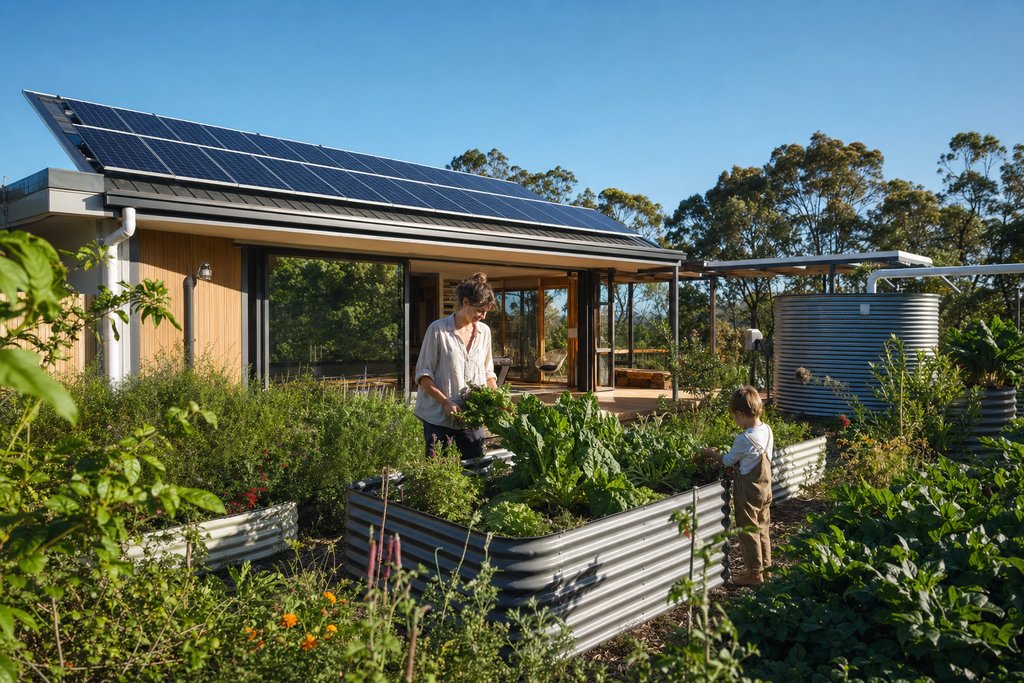
Eco living — the practice of making daily choices that reduce environmental impact and support ecological health — has moved from the margins of lifestyle discourse into mainstream Australian conversation. Rising energy costs, growing awareness of climate impacts, and a broader cultural shift toward sustainability have combined to make eco living not just an ethical choice but an economically sensible one for households across the country.
This guide covers the practical dimensions of eco living, from household energy and food systems to transport, water, and community engagement. The aim is to present actionable approaches that can be adopted incrementally, without requiring wholesale lifestyle disruption.
Home Energy and Efficiency
For most Australian households, energy use represents the largest single slice of their environmental footprint. Electricity generation, space heating and cooling, and hot water together account for the majority of home emissions. Addressing these areas offers both significant environmental gains and, increasingly, meaningful cost savings.
Solar and renewable electricity
Australia leads the world in residential solar adoption, with rooftop solar panels now installed on more than three million homes. For households with suitable roof access and adequate sunlight, solar photovoltaic systems offer one of the clearest pathways to reducing both emissions and electricity bills simultaneously. Battery storage systems, while carrying a higher upfront cost, allow households to use solar-generated power during evening hours and reduce reliance on grid electricity during peak demand periods.
For households without rooftop access — renters, apartment residents, and those with shaded or unsuitable roofs — green power purchasing through electricity retailers and community energy programs provide alternative pathways to supporting renewable generation.
Heating, cooling, and insulation
Space conditioning typically accounts for 40% or more of household energy use in temperate Australian climates. Efficient reverse-cycle air conditioning, ceiling fans, and passive design strategies — cross-ventilation, shading, thermal mass — reduce the energy required to maintain comfortable temperatures. Roof insulation offers one of the highest returns on investment for reducing heating and cooling demand in existing homes, with payback periods of three to five years common in cooler climates.
Switching from gas appliances — particularly gas heaters and hot water systems — to electric equivalents powered by renewable electricity is increasingly recommended by energy efficiency advisors as both an emissions-reduction and long-term cost strategy, given the declining cost of heat pump hot water systems and electric reverse-cycle heating.

Sustainable Food Choices
Food systems account for a significant portion of global greenhouse gas emissions, land use, and water consumption. Individual food choices, while not a substitute for systemic food system reform, do influence demand and can reduce household environmental footprints meaningfully when approached thoughtfully.
Reducing meat and dairy consumption
The environmental impact of food varies substantially by category. Beef and lamb production carries the highest land and emissions footprint per unit of nutrition, while plant-based proteins, eggs, and poultry sit considerably lower on most impact metrics. Australian dietary surveys suggest that modest reductions in red meat consumption — without requiring vegetarianism — produce measurable reductions in household food footprints. Many households find a "mostly plant-based" approach more sustainable than strict dietary rules.
Local sourcing and seasonal eating
Purchasing food from local growers and producers — through farmers markets, community-supported agriculture subscriptions, or direct farm sales — reduces transport emissions and supports local food system resilience. Seasonal eating, aligned with what local agriculture naturally produces at any given time of year, reduces demand for energy-intensive hothouse production and refrigerated long-distance transport.
Food waste reduction
Australians waste approximately 7.6 million tonnes of food annually, representing both a significant economic loss and an avoidable source of landfill methane emissions. Meal planning, correct food storage, creative use of leftovers, and home composting or worm farming are the most accessible household-scale interventions. Composting diverts organic waste from landfill while producing a valuable soil amendment for gardens.
Water Use and Conservation
Australia's highly variable rainfall and periodic droughts make water conservation a particularly relevant dimension of eco living. Urban households can significantly reduce water consumption through a combination of efficient fittings, behavioural practices, and where appropriate, rainwater harvesting.
Showerheads and tap aerators represent the simplest and lowest-cost interventions, with efficient models reducing flow rates by 50% or more without perceptible reduction in function. Garden water use, which can account for 30–40% of household water consumption during warmer months, can be reduced through drought-tolerant native planting, mulching, and drip irrigation systems that apply water directly to root zones rather than losing it to evaporation.
Sustainable Transport
Transport is the second-largest source of household carbon emissions in Australia after energy. Private car use dominates Australian transport patterns due to urban design, but alternatives are increasingly viable for many trip types in urban and inner-suburban areas.
Active transport — walking and cycling — produces no emissions and offers co-benefits for physical and mental health. Electric bicycles and cargo bikes have expanded the range and load capacity that cycling can accommodate, making it viable for a broader range of errands and school runs. Public transport, despite its limitations in lower-density areas, still produces substantially lower per-passenger emissions than single-occupancy private vehicles. For households that require a car, electric vehicles powered by renewable electricity represent the lowest-emission option in an Australian context.
Community and Collective Action
Individual eco living choices, while meaningful, achieve their greatest impact when embedded in community context. Neighbourhood-scale initiatives — community gardens, tool libraries, repair cafes, bulk-buying cooperatives — reduce the per-person resource use and cost of sustainable living. They also create social infrastructure that makes sustainability feel normal, supported, and connected rather than isolated and effortful.
Engagement with local sustainability groups, council sustainability programs, and events such as sustainable living festivals provides both practical knowledge and community connection. Research into behaviour change consistently shows that social reinforcement — seeing neighbours and community members adopting sustainable practices — is one of the most powerful drivers of individual behaviour change.
Frequently Asked Questions
What does eco living mean for an Australian household in practice?
Eco living for Australian households means making deliberate choices across daily life that reduce environmental impact while supporting ecological health. In practice this covers decisions about home energy supply and efficiency, food purchasing and waste, water use, transport modes, and community participation. The defining characteristic is an incremental, practical orientation: most improvements are achievable without wholesale lifestyle disruption, and many deliver cost savings alongside environmental benefits — particularly relevant in Australia, where energy costs are high and the solar resource is abundant.
What are the highest-impact changes an Australian household can make?
Research consistently identifies home energy, food, and transport as the three largest contributors to household environmental footprints. Within energy, switching to rooftop solar where suitable, improving insulation, and replacing gas appliances with efficient electric equivalents offer significant impact. For food, reducing red meat and lamb consumption has the largest single dietary impact, while composting and reducing food waste address both emissions and household costs. For transport, shifting trips to active transport, public transport, or an electric vehicle where viable produces meaningful reductions in a high-emission sector.
Is rooftop solar worth installing for Australian homes?
For homes with suitable roof access and adequate solar exposure, rooftop photovoltaic systems represent one of the clearest financial and environmental investments available to Australian households. Australia has among the highest residential solar adoption rates in the world, with more than three million homes now equipped with panels. Payback periods vary by system size, household consumption patterns, and state-based feed-in tariff settings, but commonly fall between five and ten years. Battery storage extends the usefulness of solar generation but carries a higher upfront cost and longer payback at current pricing.
What eco living steps can renters take without owning their home?
Renters can adopt most of the behavioural and purchasing dimensions of eco living without requiring landlord permission. Reducing energy consumption through efficient appliances, shorter showers, turning off standby appliances, and using ceiling fans before air conditioning is fully within renters' control. Sustainable food choices, active transport, community garden participation, and engagement with local sustainability events are equally available to renters. Green power purchasing through electricity retailers allows those without rooftop access to support renewable generation, and some states offer renter-accessible energy efficiency programs.
How does changing diet contribute to eco living?
Food systems generate a significant share of global greenhouse gas emissions, land use, and fresh water consumption. At the household level, reducing beef and lamb — which carry the highest land and emissions footprint per unit of nutrition — has the largest single dietary impact. Moving toward a mostly plant-based diet, buying from local producers, eating seasonally, and reducing food waste collectively constitute the most effective dietary contributions to eco living. Australian dietary surveys indicate that modest, sustainable reductions tend to produce more durable behaviour change over time than strict dietary rules.
What community resources support eco living in Australia?
Australia has an extensive ecosystem of community resources supporting eco living. Community gardens, tool libraries, repair cafes, and bulk-buying cooperatives reduce the per-person cost and resource intensity of sustainable living. Environmental groups at local and national levels — including council sustainability programs, state environment councils, and organisations like the Australian Conservation Foundation — provide education, advocacy, and community connection. Sustainability events, from major festivals to local markets, offer both practical knowledge and the social reinforcement that research consistently identifies as one of the most powerful drivers of sustained behaviour change.
